Class 1–4 Water Damage Categories Explained (With Bellevue Examples)
Not all water damage is the same — and the difference between a Class 1 and a Class 3 event can mean thousands of dollars in additional mitigation costs and weeks of additional drying time. Here’s the IICRC classification system explained in plain language, with real examples from Bellevue and the Eastside.
Two Systems, Not One: Categories vs. Classes
The IICRC S500 Standard uses two separate classification systems that are often confused. Understanding both is important — they drive completely different decisions about how a job is handled:
- Water Categories (1, 2, 3) describe the contamination level of the water itself — how dangerous it is to people and what materials can be salvaged vs. must be removed.
- Water Damage Classes (1, 2, 3, 4) describe the extent and rate of evaporation — how much material is wet and how difficult it will be to dry.
A single water loss event can be both Category 2 and Class 3 — and both classifications matter simultaneously when determining scope, equipment, and cost.
Water Damage Categories — The Contamination Level
Category 1 — Clean Water
Category 1 water originates from a sanitary source and poses no significant threat to human health at the time of loss. Common sources in Bellevue homes:
- Supply line failures (toilet supply, refrigerator ice maker, dishwasher fill hose)
- Faucet or fixture overflow — common in older condo buildings near Bellevue Square
- Melting ice or snow intrusion from roof valleys on homes in the Somerset and Newcastle areas after rare snow events
- Rainwater intrusion through a suddenly failed window seal or roof penetration — before the water contacts contaminated materials
Important caveat: Category 1 water doesn’t stay Category 1. Once clean water contacts porous materials, sits for more than 24–48 hours, or contacts contaminated surfaces, it degrades to Category 2. This is why rapid extraction matters even for “clean” water events.
Category 2 — Grey Water
Category 2 contains significant contamination and has the potential to cause illness or discomfort if ingested or if a person is exposed through contact with affected materials. Common sources in the Bellevue market:
- Washing machine overflow (contains detergents, soils, and potential pathogens from laundry)
- Dishwasher leak or overflow
- Toilet overflow without visible solid waste — common misconception that this is “clean”
- Sump pump failure with grey water discharge
- Aquarium break
- Category 1 water that has been sitting for 24–48 hours in a warm or enclosed space
Category 2 events require full PPE for technicians, EPA-registered antimicrobial treatment of all affected surfaces, and removal of affected porous materials (drywall, carpet pad, insulation) rather than in-place drying. Carpet may be salvageable depending on fiber type and exposure time; carpet pad is nearly always removed regardless.
Category 3 — Black Water
Category 3 is grossly contaminated water containing pathogens and toxic agents. This is a biohazard classification. Sources in Bellevue homes:
- Sewage backup — the most common Category 3 event we see. Sewer lateral blockages affect aging infrastructure throughout central and south Bellevue, particularly in the Crossroads area (98008) and neighborhoods built in the 1960s–70s where roots have compromised cast-iron lateral lines.
- Stormwater or ground surface water intrusion — any water that has contacted outdoor soil or surface runoff is Category 3, regardless of how “clean” it looks. Flood events near Mercer Slough, Kelsey Creek, and lower Newport Hills fall into this category.
- Category 2 water that has remained untreated beyond 48–72 hours
- Water from a toilet bowl — includes feces, urine, and all associated pathogens
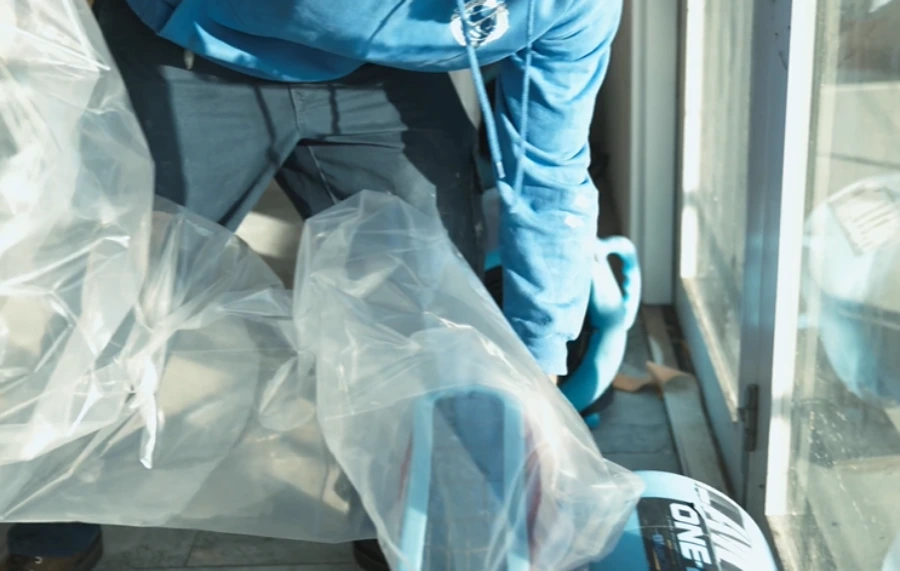
Category 3 protocol requires full-body PPE, respirators, containment of affected areas, EPA-registered antimicrobial and/or disinfectant treatment, and removal of all porous materials — no exceptions for drywall, insulation, carpet, or pad regardless of drying feasibility. The cost of attempting to dry Category 3-affected porous materials in place is almost always a mold remediation job within 30–90 days.
Water Damage Classes — The Extent and Rate of Evaporation
While categories describe contamination, classes describe how hard it is to dry. The class is determined by how much of the structure is wet and what materials are affected — specifically, how hygroscopic (water-absorbing) those materials are.
Class 1 — Least Harmful, Fastest to Dry
Class 1 means minimal absorption of moisture into low-porosity materials. The affected area is typically a portion of a room, and materials like sealed concrete, ceramic tile, or solid hardwood have limited moisture uptake. Examples in Bellevue:
- A small area of a garage floor from a leaking water heater connection
- A section of sealed concrete basement floor with no wall wicking
- Tile flooring in a bathroom with contained overflow — no adjacent wall or cabinet wetting
Class 1 typically dries in 2–3 days with minimal equipment. It’s also the most common class where a homeowner’s own fans and dehumidifier can reasonably address the damage — though professional moisture verification is still recommended for insurance documentation.
Class 2 — Significant Absorption
Class 2 involves at least an entire room, with water wicking up walls 24 inches or less, and carpet and pad typically saturated. This is the most common class we see in Bellevue residential work:
- A burst pipe under a bathroom vanity that ran for several hours, soaking the subfloor and lower 12 inches of drywall
- An appliance overflow — washing machine, dishwasher — affecting a kitchen or utility room and adjacent spaces
- Minor basement flooding from window well overflow after heavy rain in Newport Hills or Lake Hills (98006, 98007)
Class 2 requires extraction, flood cuts (removing drywall 12–18 inches above the moisture line), removal of saturated carpet pad, and 3–5 days of drying with properly sized equipment. Drying logs are required for insurance documentation.
Class 3 — Maximum Absorption
Class 3 is the most common class resulting in the highest mitigation costs. Water has come from above — ceiling, walls, or overhead pipes — saturating walls, insulation, and subfloor. The entire structural assembly is affected.
- A supply line failure inside a second-floor wall that ran undetected overnight — water saturates the wall cavity, soaks through the subfloor into the space below, and wicks up the lower level walls
- A roof leak during an atmospheric river event that soaks through roof sheathing, ceiling drywall, insulation batt, and into wall cavities in homes in the 98004–98006 zip codes
- A failed water heater or HVAC condensate drain on an upper floor in a Bellevue condo building
Class 3 events require removal of all affected drywall and insulation, directed drying of structural cavities, and typically 5–7 days of equipment time. For a 1,500 sq ft affected area, this often means 8–12 LGR dehumidifiers and 20–30 high-velocity air movers running continuously.
Class 4 — Specialty Drying Situations
Class 4 describes water damage in materials that have very low permeance — meaning they absorb water slowly and give it up slowly. Standard evaporative drying won’t work efficiently, and specialized drying methods are required:
- Hardwood flooring — solid or engineered hardwood absorbs and releases moisture very slowly. Floor drying mat systems inject dry air directly beneath floor planks. Without specialty drying, hardwood will cup, buckle, or crown even after the surrounding materials appear dry.
- Concrete slab — a flooded slab in a Bellevue daylight basement can hold moisture for weeks. Desiccant dehumidifiers and aggressive airflow are required; standard LGR units can’t pull moisture from concrete effectively.
- Plaster walls — found in pre-1960s homes in the 98004 and 98005 zip codes near downtown Bellevue and Medina borders. Plaster holds moisture in its substrate and releases it very slowly. Injection drying or extended drying timelines are typical.
- Brick and stone — masonry veneer on some Bellevue architectural styles can hold significant moisture while appearing dry on the surface.
What Category and Class Mean for Your Insurance Claim
Category and class directly affect what your insurance carrier will authorize payment for:
- Category 2 and 3 events require removal of all affected porous materials — this is non-negotiable under S500, and most carriers will authorize this scope when documentation supports the classification.
- Class 3 and 4 events justify larger equipment deployments and longer drying timelines — again, supported by daily monitoring documentation.
- A misclassification (calling a Category 3 event Category 2, or a Class 3 event Class 2) creates a paper trail that can be used to dispute additional work if mold or structural damage develops later. Correct classification from day one protects you.
Water Damage in Bellevue — Get the Right Classification From the Start
Misclassification costs homeowners thousands. Our IICRC WRT & ASD certified technicians assess and document your loss correctly, from the first hour.
Frequently Asked Questions — Water Damage Categories and Classes
Is black water the same as Category 3 water damage?
Yes. “Black water” is the informal term for Category 3 water damage — grossly contaminated water containing pathogens, sewage, or outdoor floodwater. The term refers to the contamination level, not the color of the water. Even visually clear stormwater that has contacted outdoor soil is Category 3 under the IICRC S500 standard.
Can Category 1 water damage become Category 3?
Yes — and this is one of the most important reasons for rapid response. Clean water that sits in porous materials for 48–72 hours can support microbial growth and degrade to Category 2 or Category 3. In Bellevue’s mild, humid climate, this degradation can happen faster than in drier regions. What starts as a simple supply line break on a Friday evening can be a Category 2 or 3 event by Sunday if not extracted promptly.
What class of water damage do most burst pipes cause in Bellevue homes?
Most burst pipe events in Bellevue residential homes result in Class 2 or Class 3 damage, depending on how long the pipe ran before discovery and which direction the water traveled. A supply line failure on an upper floor that runs overnight will almost always be Class 3 — water travels through subfloor, ceiling drywall below, wall cavities, and insulation. A contained overflow in a single bathroom that was stopped within an hour is more likely Class 1 or 2.
Does Bellevue’s climate affect water damage drying time?
Yes, significantly. Bellevue’s October–March ambient relative humidity of 75–90% means that any open-air drying or low-capacity dehumidification is fighting the outdoor humidity entering through HVAC systems and normal air infiltration. Industrial LGR dehumidifiers sized for the structure are necessary to actually lower the air’s moisture content enough to drive evaporation from structural materials. This is why Bellevue jobs often require more equipment than the same-sized loss in a drier climate.