Biohazard Emergency · Bellevue, WA
Sewage Backup Cleanup in Bellevue — Safe, Certified, Fast — sewage cleanup Bellevue Experts
As Bellevue’s trusted sewage cleanup Bellevue specialists, sewage backup is a Category 3 biohazard. Our IICRC-certified Bellevue crew contains, extracts, and decontaminates — arriving in 30–45 minutes, any hour.
· Direct insurance billing · WA State Licensed
Sewage Backup Experts Bellevue Homeowners Trust
Our IICRC-certified technicians respond fast to contain sewage contamination, remove biohazardous material, and fully restore your property — safely and completely.
- Category 3 water extraction and disposal
- EPA-approved disinfection and deodorization
- Structural drying to prevent mold growth
- Full insurance documentation provided
Sewage Backup Is Not a Plumbing Problem — It’s a Health Emergency — sewage cleanup Bellevue
Sewage-contaminated water contains E. coli, hepatitis A, salmonella, and norovirus. Do not walk through affected areas barefoot or allow children or pets into the space. Do not run HVAC systems — this can spread airborne pathogens throughout the structure. Call us before re-entering the affected area.
What We See in Bellevue
Common Causes of Sewage Backup
Bellevue’s sewer system and aging infrastructure create several predictable failure points. Here’s what drives most of our calls. Our sewage cleanup Bellevue team responds within 30 minutes, any time of day.
Tree Root Intrusion
Roots from mature trees in Bellevue’s neighborhoods infiltrate clay and older PVC lateral lines through joints and cracks. Root masses obstruct flow until the line backs up into the lowest fixture in the home — typically a floor drain or basement toilet.
Heavy Rain & Sewer Surcharge
During sustained rainfall, Bellevue’s combined sewer system can surcharge, pushing sewage backward through lateral connections into homes at lower elevations. Basement units and ground-floor homes are most vulnerable.
Grease & Debris Blockages
Fat, oil, and grease accumulation in kitchen drain lines creates partial blockages that eventually restrict flow completely. Flushable wipes — despite the label — are a leading cause of backup in residential lateral lines throughout the region.
Collapsed or Offset Lateral Lines
Older Bellevue homes with clay tile or Orangeburg sewer laterals experience pipe collapse and joint offset from ground settling and glacial soil movement. A partially collapsed line restricts flow and eventually backs up completely.
Failed Backflow Preventers
Backflow prevention valves protect homes from municipal surcharge events, but they fail when they’re not maintained or when debris holds them open. A failed valve during a surcharge event can send hundreds of gallons into a finished basement.
Main Line Obstruction
When the municipal main or a shared lateral serving multiple properties is partially blocked, all homes upstream of the blockage are at risk. A neighbor’s backup can be a warning sign for yours.
Our Process
Expert sewage cleanup Bellevue: How We Remediate a Sewage Backup
Every sewage job follows IICRC S500 and S520 protocols. Category 3 remediation requires containment, full extraction, HEPA filtration, and chemical decontamination — not just drying.
Scene Assessment & Containment
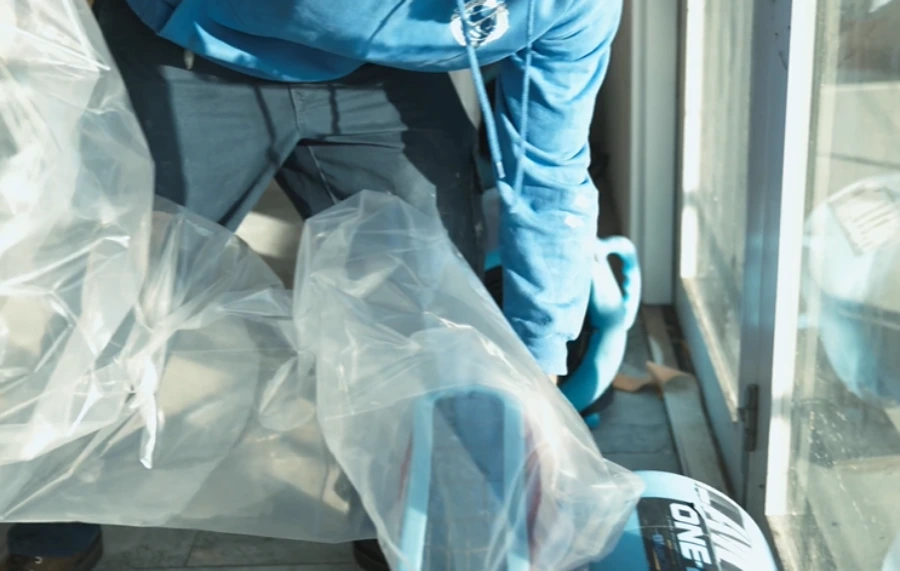
We arrive within 30–45 minutes in full PPE. Before extraction begins, we establish containment barriers and negative air pressure with HEPA air scrubbers to prevent cross-contamination to unaffected areas. We identify the water category, locate the source, and confirm the sewer line is isolated or capped before proceeding.
Category 3 Extraction
Truck-mounted extractors remove standing sewage-contaminated water. All extracted material is handled as biohazardous waste and disposed of according to Washington State regulations — not discharged into a floor drain or storm system. Specialty tools remove water from carpet, pad, and subfloor joints.
Controlled Demo & Material Removal
All porous materials that contacted Category 3 water — drywall, insulation, carpet, pad, and in most cases hardwood flooring — must be removed per IICRC protocol. We cut precisely and document every material removed for your insurance claim. Contents are inventoried before leaving the structure.
Antimicrobial Treatment & Decontamination
All affected surfaces — concrete, framing, subfloor — are treated with EPA-registered antimicrobial and disinfectant solutions. This step is repeated after structural drying to confirm no residual contamination. We do not skip this step based on timeline pressure.
Structural Drying
LGR dehumidifiers and high-velocity air movers are positioned to dry framing, subfloor, and wall cavities. HEPA air scrubbers continue running throughout drying to maintain air quality. Daily moisture readings document progress for your drying log.
Final Inspection & Documentation Package
Equipment is removed only when moisture readings meet IICRC dry standard and decontamination is confirmed. You receive a complete package: moisture maps, daily logs, decontamination records, photos, and scope of work for your contractor and insurance adjuster.
Every hour of contact time increases contamination risk and remediation cost. Call us — we’ll have a certified crew at your address within 30–45 minutes, around the clock. “Basement toilet backed up at 11pm on a Sunday. They were here in under 40 minutes, had the sewage out and containment set up before midnight, and handled everything with our insurance directly. The whole crew was in full PPE and took it seriously. I wouldn’t trust anyone else with something like this.” — Homeowner, Somerset neighborhood, BellevueSewage Backup in Your Bellevue Home Right Now?
Why Bellevue Homeowners Call Us First
Sewage remediation requires certified technicians, proper biohazard disposal, and documentation your insurer will accept. We deliver all three. Contact us today for fast sewage cleanup Bellevue service.
Biohazard-Certified Crew
Every technician on a sewage job holds IICRC AMRT certification and is trained in Category 3 handling protocols. We carry full PPE, containment materials, and EPA-registered disinfectants on every truck — not as an add-on.
Insurance Documentation Built In
We produce the drying log, decontamination records, moisture maps, photo documentation, and scope of work your adjuster needs. We’ve worked with every major carrier in Washington State and know what each one requires.
Local Crew, No Brokering
Every truck is ours. Every technician is trained in-house. When you call at 11pm you get our Bellevue crew — not a subcontractor dispatched from Tacoma who doesn’t know the difference between Category 2 and Category 3 handling.
Serving All Bellevue Neighborhoods
Factoria
Newport Hills
Eastgate
South Bellevue
Crossroads
Wilburton
Lake Hills
Bridle Trails
West Bellevue
Downtown Bellevue
Kelsey Creek
Frequently Asked Questions
Have more questions about sewage cleanup? Our Bellevue team is standing by 24/7.
Is sewage backup covered by homeowner’s insurance?
Can I clean up sewage backup myself?
How long does sewage backup remediation take?
Does everything need to be thrown away after a sewage backup?
What should I do immediately after a sewage backup?
Safe Sewage Cleanup in Bellevue — Starting Right Now
IICRC-certified biohazard crew, local equipment, full insurance documentation. One call handles everything.
· All insurance accepted · WA State Licensed & IICRC Certified
Sewage Removal & Biohazard Cleanup in Bellevue WA
Professional sewage removal requires more than cleaning up what you can see. Raw sewage contains bacteria, viruses, and pathogens that require specialized equipment and EPA-registered disinfectants. Our sewage removal process in Bellevue includes complete extraction, disposal of contaminated porous materials, surface decontamination, and air treatment to eliminate odors and airborne pathogens. Sewage removal documentation is provided for insurance claims and health department requirements. Our licensed biohazard crew handles sewage removal safely so your family can return to a healthy home.